Monday, February 21, 2011

Asthma diagnosis - Lung Function Test


Asthma is characterized by reversible airway obstruction. That means the airway narrowing in asthmatic patients should be, at least at the outset, fully reversible. As the disease progresses without treatment, airway remodeling occurs and this leads to irreversible loss of lung function.

Patients with asthma often present with chest tightness, shortness of breath and wheezing. However, chronic cough is an early sign of asthma, and many patients might not experience wheezing. It is now recognized that asthma patients should receive treatment early on in order to prevent irreversible loss of lung function, especially in children. It is therefore important to make a diagnosis early so that treatment can be started.
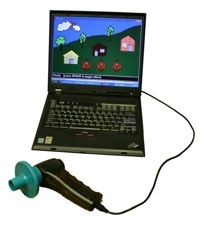
Lung Function testing is an essential tool in asthma management. At the Centre for Allergy and Asthma Care, we employ the KoKo Spirometer for lung function testing. All asthmatic patients should undergo spirometry testing at baseline and periodically during treatment to monitor their progress.

Some patients with asthma and chronic cough rarely develop wheezing and airway narrowing. Regular spirometry testing will therefore be normal. For these patients, inhalation challenge with methacholine will show bronchial hypersensitivity. We employ the KoKo DigiDoser to perform inhalation challenge. This computer-controlled dosimeter can accurately administer dosages for inhalation followed by spirometry measurements. We also perform lysine-aspirin inhalation challenge to diagnose aspirin-sensitive asthma, and allergen challenge in special circumstances such as occupational asthma.

Reference information:  www.allergy.hk

The information aims to provide educational purpose only. Anyone reading it should consult physician before considering treatment and should not rely on the information above.

Sunday, February 20, 2011

Diagnosis of asthma


The diagnosis of asthma is confirmed if the patient demonstrates lower airway obstruction on lung function testing that is reversible spontaneously or by administering an inhaled bronchodilator. However, some patients might have cough as their only symptom and do not demonstrate airway obstruction. In these cases, bronchial challenge test with inhaled methacholine or histamine will result in significant airway obstruction in those patients with airway hypersensitivity. This test is of great value in diagnosing patients with asthma masquerading as chronic cough. Some patients only develop asthma symptoms with exercise, and would thus require an exercise challenge. Once asthma is diagnosed, it is important to ascertain the cause of the disease, as the prognosis and treatment are quite different. In children, the absence of allergy is a good prognostic factor, since most of these patients will outgrow their asthma. In adults, one must consider other types of asthma such as occupational asthma and aspirin-sensitive asthma. Allergy testing is therefore an important part of asthma evaluation, since the treatment of allergic asthma includes allergen avoidance and desensitization. Patients with occupational asthma usually need to have a career change, but might be eligible for compensation.

House dust mite allergen is the major cause of allergic asthma worldwide, and even more so in Hong Kong where the climate is warm and humid. It is therefore important to minimize soft furnishings such as carpets, cushions and upholstered furniture at home. The bed is a major reservoir of mite allergen, and should be encased with dust-impermeable covers. It is often necessary to evict animals from home if the patient is allergic to them. The mainstay of drug treatment for asthma is inhaled corticosteroid. These drugs can prevent airway inflammation, and are effective in reducing symptoms, exacerbations and rescue medication use. They have been shown to prevent airway remodeling, a process that leads to irreversible loss of lung function. Patients with allergic asthma should seriously consider undergoing allergen desensitization treatment. Desensitization has been shown to reduce steroid requirement over time, and children with rhinitis who received desensitization are less likely to develop asthma.

Reference information:  http://www.allergy.hk

The information aims to provide educational purpose only. Anyone reading it should consult physician before considering treatment and should not rely on the information above.

Friday, February 18, 2011

過敏反應怎樣發生?


當你對某類的致敏原產生起過敏作用後,每次再接觸時,都會出現過敏反應。 最常見的過敏反應有兩種:由抗體引起或細胞引起的過敏反應。
 
抗體引起的過敏反應
人體的免疫系統會製造一種名為免疫球蛋白E(或者IgE)的抗體,專門針對致敏原。當免疫系統產生抗體後便會經過血液進入體內各系統,如皮膚、氣管、腸胃等。這些部位含有肥大細胞,尤以皮下最多,而肥大細胞表面則有IgE認受體,於血液內的IgE結合。當致敏原接觸到肥大細胞表面的IgE抗體時,便觸發肥大細胞的活躍性。活躍後的肥大細胞會釋放一些發炎因子(如組織胺、白三稀素等),令病人產生過敏反應,如血管滲水、血管膨脹、痕癢、氣管收窄等等。此反應可以在短時間如數分鐘至一小時內產生。鼻敏感、哮喘、蕁麻疹、風疹、急性食物過敏、藥物過敏、昆蟲過敏等都是由第一類過敏反應引起。

細胞引起的過敏反應
免疫系統的T細胞對某些致敏原產生過敏作用,當T細胞再次接觸此類致敏原時,就會釋放一些因子,引起發炎反應。延遲性過敏反應通常會在接觸後24至48小時內發生。延遲性過敏反應可以造成皮膚濕疹、接觸性皮膚敏感或食物造成的腸胃敏感等。
 

以上所提供的資訊僅作為教育及參考用途,如果你有任何醫療問題,應向自己的過敏病科醫生查詢,而不應單倚賴以上提供的資料。

Thursday, February 17, 2011

霉菌 - 香港家居致敏原


霉菌孢子會在雨季後較多,而家居的霉菌孢子通常是由室外傳入。霉菌不單會引起哮喘、鼻敏感,有部分霉菌還會製造毒素。

霉菌跟植物不同,它本身沒有葉綠素,不會產生光合作用,故生長時需要碳水化合物。此外,它亦需要在潮濕和氣溫達18-32oC 的環境下生長,所以,不難在洗手盆底部或窗台漏水的地方見到霉菌。若家中的濕度高時,甚至在地毯或牆紙上亦會發現霉菌。

減少霉菌
1.     若家居較易滋生霉菌,便需要把窗關好,改用窗台冷氣,減少室外霉菌傳入家中
2.     家居已有霉菌問題,便要找出霉菌生長的地方,然後用5%的稀釋漂白水殺菌
3.     容易滋生霉菌的東西,如舊地毯、牆紙等便要更換,改用漆油及利用磚、瓦的物料來鋪蓋地板
4.     使用高效率的空氣清新機減少霉菌孢子的數量
5.     定期檢查空調系統,減少霉菌孢子經空調釋放在空氣中
6.     使用抽濕機減低室內濕度,並避免在家裡種植太多盆栽,減少盆栽中的泥土滋生霉菌

參考資料:《了解過敏症》

以上所提供的資訊僅作為教育及參考用途,如果你有任何醫療問題,應向自己的過敏病科醫生查詢,而不應單倚賴以上提供的資料。

Wednesday, February 16, 2011

蟑螂 - 香港常見致敏原


香港平均有15%-20%的鼻敏感或哮喘患者,在皮刺測試當中發現對蟑螂過敏。有臨床研究發現,他們在接觸蟑螂的致敏原後會引致哮喘和鼻敏感等症狀。

蟑螂的致敏原是牠的唾液、糞便、分泌物及死皮。待這些致敏原乾後便會變成家居塵埃,一旦病人吸入帶有致敏原的塵埃後便會出現過敏反應。所以,若患者發現對蟑螂有敏感反應時,須檢查家居有否蟑螂出沒。

1.     首先在蟑螂容易躲藏的地方放置蟑螂酒店並把罅隙封好,以防蟑螂藏匿
2.     若找到蟑螂時,需要找專業滅蟲專家消滅蟑螂
3.     緊記時常保持家居清潔,避免隨便放置食物及經常清潔廚房和浴室,減少蟑螂致敏原。

蟑螂喜歡在溫暖、潮濕及黑暗的環境中生活,如浴缸底部、熱水爐附近,甚至在洗衣機、乾衣機的背後等較為溫暖的地方。蟑螂亦會進食不同種類的食物,包括牙膏、肥皂、廚房積聚的油污等;還有,蟑螂的生命力強,就算沒有食物和水仍能繼續生存數星期。牠喜愛晚上覓食,如日間發現蟑螂出沒時,有可能是十分需要食物。

參考資料: www.allergy.hk, 《了解過敏症》

以上所提供的資訊僅作為教育及參考用途,如果你有任何醫療問題,應向自己的過敏病科醫生查詢,而不應單倚賴以上提供的資料。

Tuesday, February 15, 2011

Immunotherapy treats annoying allergy problem


Forty million to 50 million Americans suffer from some sort of allergy, according to a recent report from Harvard Medical School. Most medications — nasal sprays, antihistamines and the like — only treat the symptoms, not the underlying sensitivity.


The only way to diminish allergy is through immunotherapy. Allergists typically provide injections, starting with a tiny bit of what bothers the patient and slowly ramping up to larger amounts.

Immunotherapy does not exactly provide a "cure," but it can greatly reduce annoying symptoms. For example, many people can't stand more than five minutes in a house with a cat. After immunotherapy, they frequently report they can spend the night in a feline-occupied home. That's not to say they're necessarily ready to adopt several kittens for their own abode; it just means they'll need fewer tissues and less Benadryl when Fluffy is nearby.

"Nothing works 100% on everybody," says Dr. Michael Blaiss, an allergist at the University of Tennessee Health Science Center in Memphis. He estimates that 4 in 5 people who get allergy shots reap the benefit.


The information aims to provide educational purpose only. Anyone reading it should consult physician before considering treatment and should not rely on the information above.
Monday, February 14, 2011

過敏測試 - 肺功能測試(Lung Function Test)


利用儀器量度肺活量,測度哮喘的靈敏度非常高。若患者的大氣管受到哮喘影響而收窄時,數值會下降最少20%;而較輕微的哮喘患者只會影響支氣管,大氣管可能仍然未被影響。

輕微哮喘患者會吸入舒張氣管的藥物,然後再做測試,數值應該會回復正常,此情況下便可以肯定是哮喘問題了。如患者的測試數值是正常但仍有懷疑時,可接受激發性測試,讓患者吸入少劑量刺激氣管藥物,每次吸入後便做肺功能測試,數值正常時可加大劑量,直到患者的數值下降或至最高濃度。若患者的數值到最高濃度時仍未受影響,便排除哮喘的可能性。
  
肺功能測試的最大問題在乎於患者測試時的技術;測試技術員需要教導患者如何正確地進行測試。
  
以上的種種測試方法有助過敏病科醫生診斷過敏症。然而測驗只屬輔助性質,最重要的診斷還是由病歷著手,且必須明白病理才可以選擇正確的測試方法。如亂用測試,會導致不正確且混淆的結果。

參考資料: www.allergy.hk, 《了解過敏症》

以上所提供的資訊僅作為教育及參考用途,如果你有任何醫療問題,應向自己的醫生查詢,而不應單倚賴以上提供的資料。